


Hot weather can expose a smartwatch to direct sunlight, high surface temperatures, dust, sweat, rain, and long hours away from a charger. A rugged smartwatch must do more than look tough—it needs to address the practical challenges created by these demanding conditions.
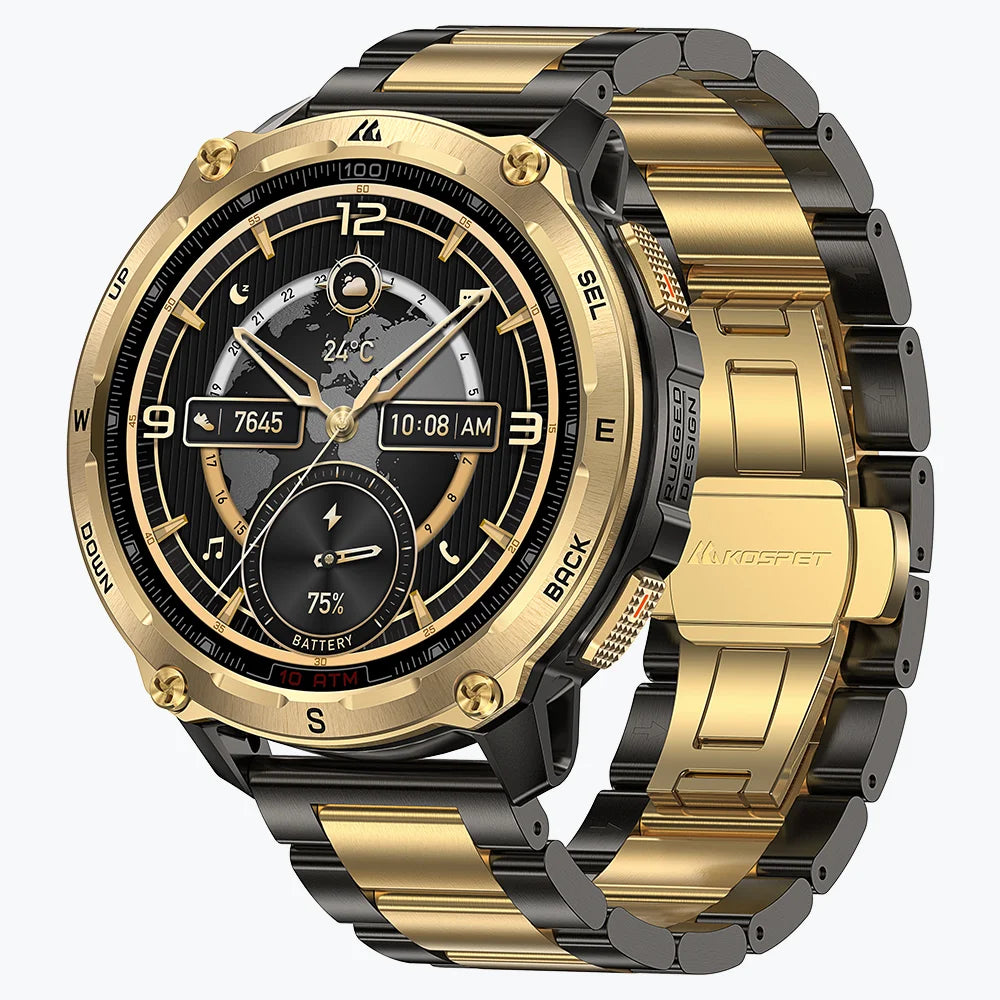
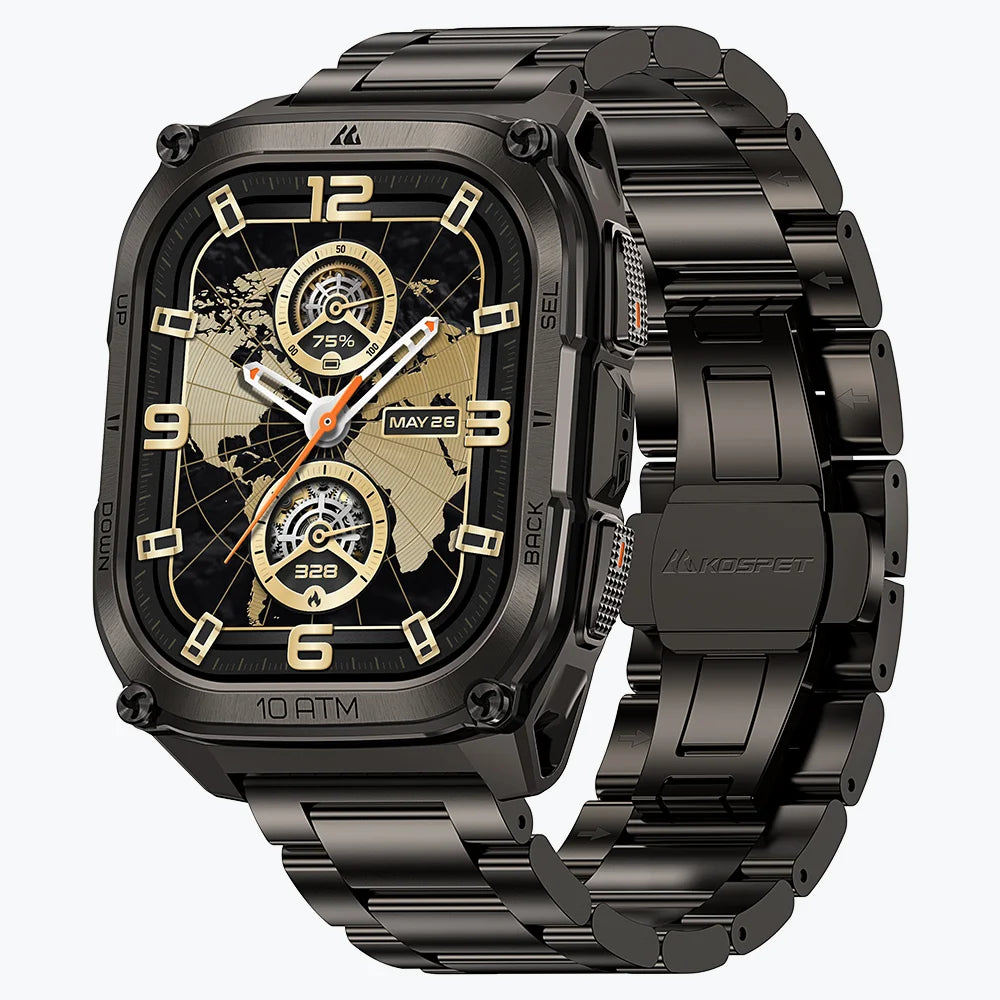
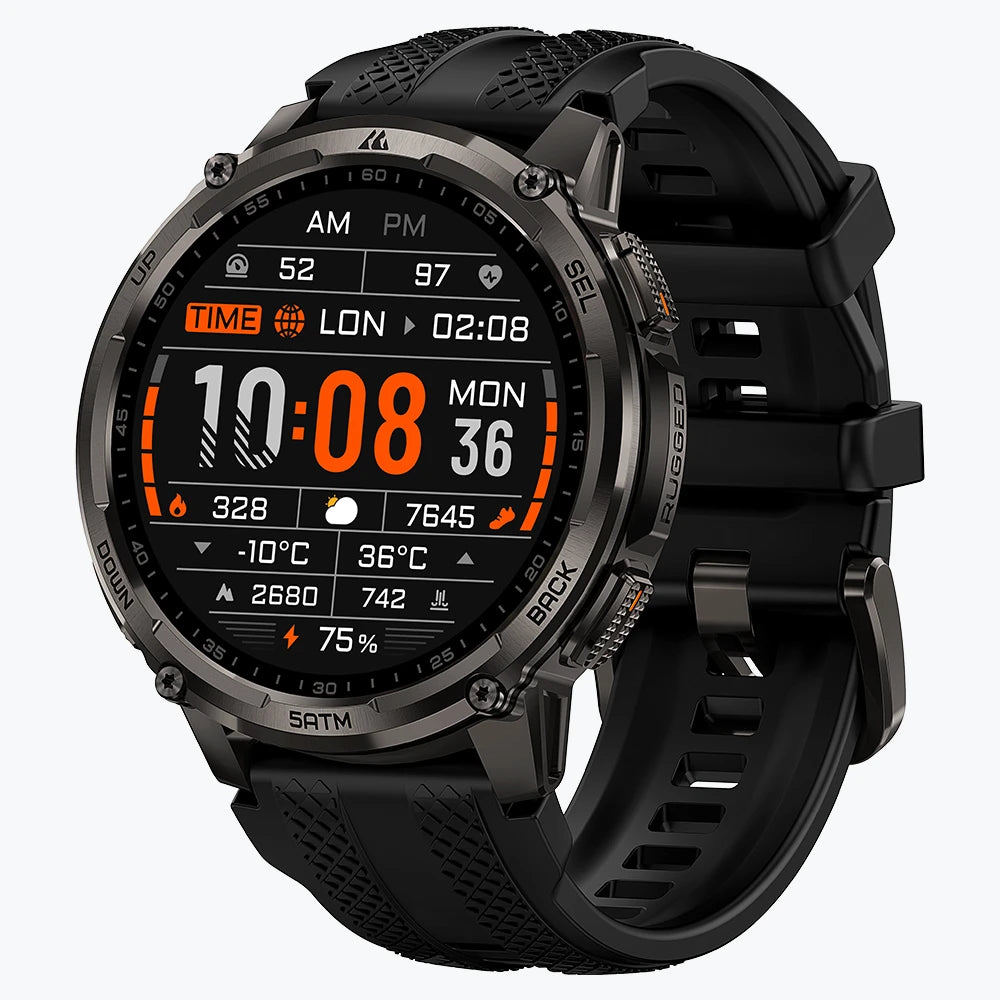
For outdoor workers, KOSPET TANK M4C provides the most relevant combination of heat-related testing, durable construction, screen visibility, and offline tools.
Garmin Instinct 3 Solar reduces charging pressure during long days outside. Apple Watch Ultra serves iPhone users who rely on communication and connected apps, while Suunto Vertical focuses on offline navigation and multi-day travel.

Top Heat-Resistant Outdoor Smartwatches at a Glance
| Product | Main Problem Solved | Temperature Evidence | Outdoor Advantage | Navigation | Main Compromise |
|---|---|---|---|---|---|
| KOSPET TANK M4C | Outdoor work involving heat, dust, rain, and impact | KOSPET presents -50°C to 70°C within its broader durability testing and lists high-temperature operation and storage evaluations | Auto-adjusting AMOLED display, stainless steel construction, extended battery life | Dual-band positioning, offline maps, route import | Stainless steel body adds weight; temperature figures reflect durability testing |
| Garmin Instinct 3 Solar | Long periods away from charging access | No numeric upper operating limit appears on the cited product page | Sunlight-readable MIP display and solar charging | Multi-band GPS, course guidance, breadcrumb trail, TracBack | No detailed onboard topographic maps; solar gains depend on light exposure |
| Apple Watch Ultra | Communication and app access during hot-weather activities | Apple recommends -20°C to 55°C ambient temperature while worn | Cellular connectivity, bright display, extensive app support, safety functions | GPS and third-party navigation apps | More frequent charging; rising internal temperature can restrict some functions |
| Suunto Vertical | Navigation beyond mobile coverage | Suunto lists military testing but does not publish a comparable upper temperature limit on the cited page | Offline maps and long GPS endurance | Detailed maps, routes, POIs, dual-band GNSS | Fewer communication and general smartwatch functions |
Top Heat-Resistant Outdoor Smartwatch Picks for Hot Weather
The useful difference between these watches is not the length of their specification lists. Each model addresses a separate hot-weather problem, from harsh job-site exposure to limited power and unreliable mobile coverage.
KOSPET TANK M4 :Top Heat-Resistant Smartwatch for Outdoor Workers
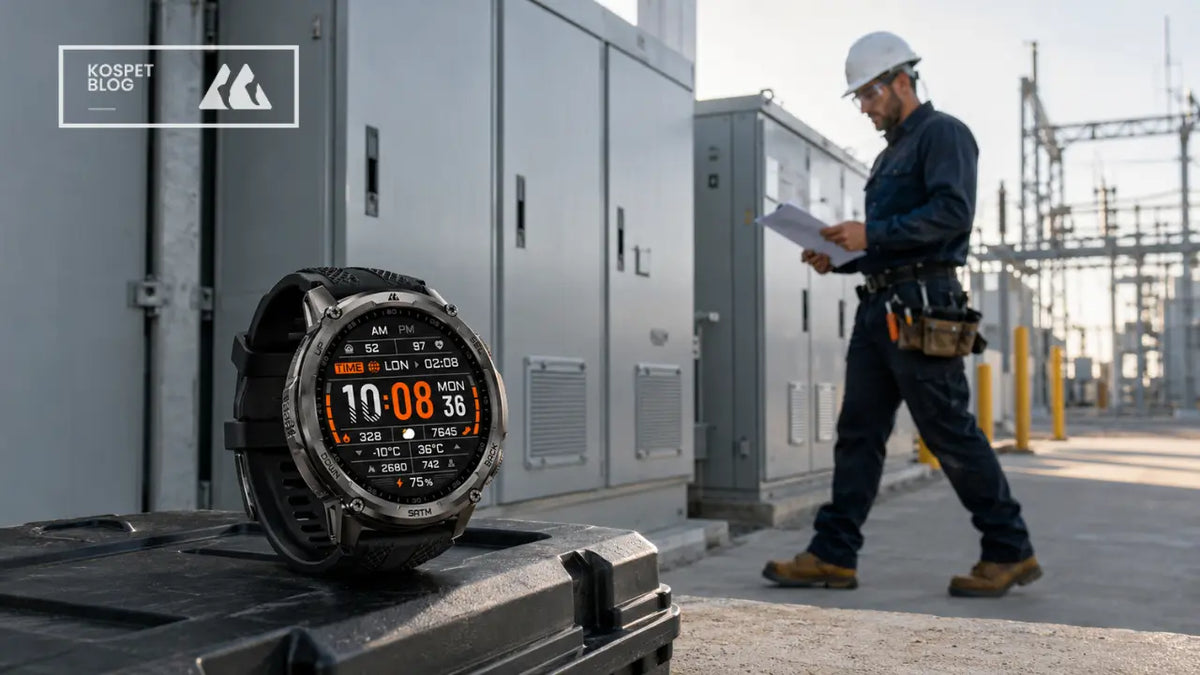
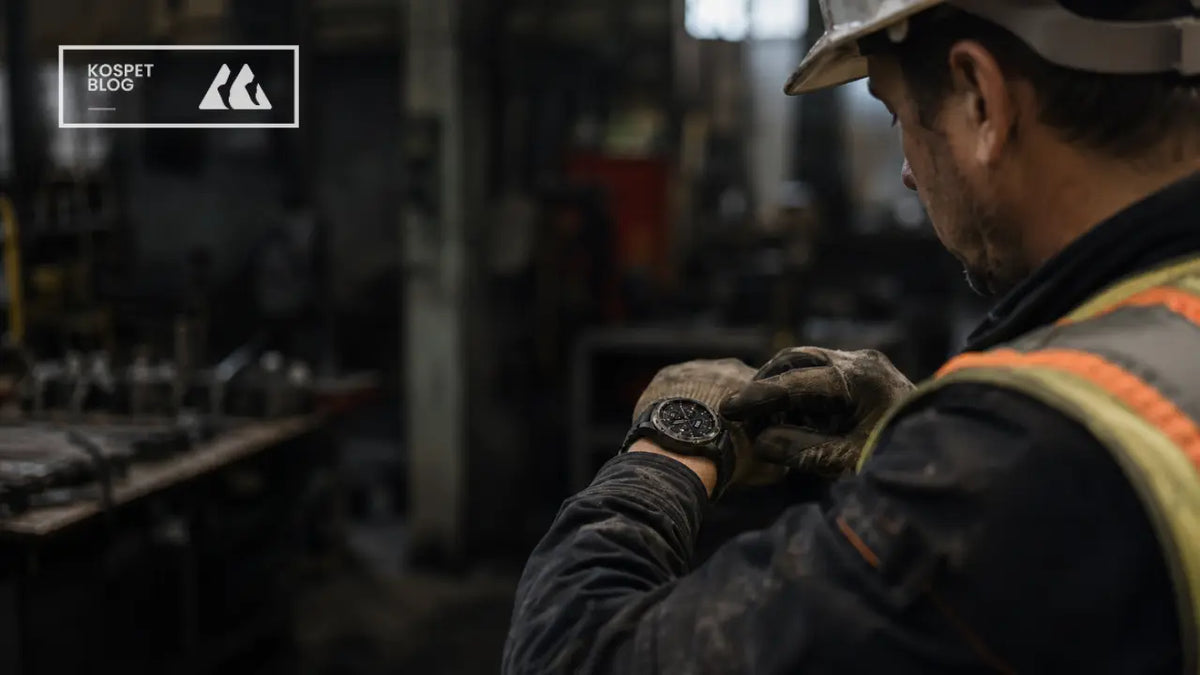
Outdoor shifts often combine heat with dust, rain, vibration, dirty gloves, and accidental impact. KOSPET TANK M4 addresses this mixed environment rather than treating temperature as an isolated challenge.
{{product}
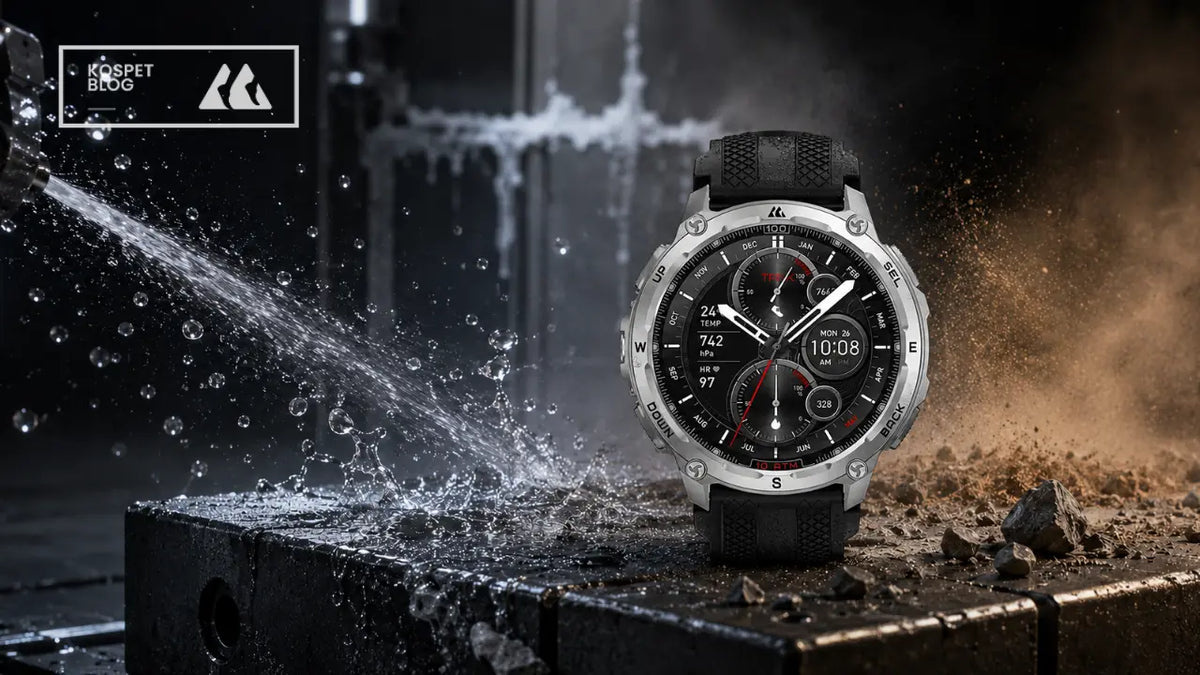
Why it fits job-site use. KOSPET states that the TANK M4 passed 15 U.S. MIL-STD-810H tests. The evaluation list covers high-temperature operation, high-temperature storage, temperature shock, solar radiation, dust, rain, vibration, and impact.
What workers gain in practice. Automatic screen brightness keeps alerts and route information visible while moving between direct sunlight and shade. Stainless steel construction adds protection against everyday knocks, while 10 ATM and IP69K ratings support use around rain, water, and dirty outdoor conditions.
Dual-band positioning and offline maps also help workers operating beyond reliable mobile coverage. Routes can remain available during site inspections, agricultural work, utility maintenance, and remote field assignments. KOSPET reports up to 15 days of typical use, reducing the need to recharge between shifts.
Understanding the temperature claim. KOSPET presents the -50°C to 70°C figures within its broader durability testing. These results provide useful context for outdoor workers comparing watches for demanding hot-weather conditions.
Garmin Instinct 3 Solar — Top Pick for Long Days Away From Power
Garmin Instinct 3 Solar solves the problem of limited charging access. Its strengths become more valuable during remote patrols, trail surveys, camping trips, and field assignments that extend beyond a normal workday.
- The low-power MIP display remains readable under strong sunlight without demanding constant high brightness.
- Solar input extends runtime during prolonged outdoor use and reduces charging pressure in the field.
- Multi-band GPS, breadcrumb navigation, Back to Start, and TracBack help users retrace a route without relying on a phone.
Garmin describes unlimited smartwatch-mode battery under specific solar conditions, based on all-day wear and three hours of daily exposure at 50,000 lux. Sleeves, shade, weather, GPS activity, and notification use can change the result.
Garmin does not publish a numeric upper operating temperature on the cited product page. The Instinct 3 Solar also follows courses and breadcrumb trails rather than displaying the detailed topographic maps available on Suunto Vertical.
Apple Watch Ultra — Top Pick for Connected iPhone Users in Hot Weather
Apple Watch Ultra suits users who need communication more than expedition-level battery endurance. Calls, messages, calendar updates, payments, and app notifications remain accessible during outdoor events, site visits, travel, and training.
Apple provides a clearer heat-use boundary than many competitors. All Apple Watch Ultra models are recommended for wear in ambient temperatures from -20°C to 55°C. Charging has a narrower 0°C to 35°C range, while the listed storage range extends from -20°C to 45°C.
Those separate figures matter in hot climates. A watch may remain within its wearing range during an outdoor activity but still be too warm to charge inside a parked vehicle or exposed equipment case.
The tradeoff appears during extended trips. Apple Watch Ultra requires more frequent charging than the Garmin and Suunto options. Rising internal temperature can also dim the display, slow or stop charging, pause data transfers, close apps, or temporarily affect cellular service.
For users already working within the Apple ecosystem, the combination of connectivity, familiar apps, and clear temperature guidance may be more useful than maximum battery life.
Suunto Vertical — Top Pick for Remote Navigation and Multi-Day Trips
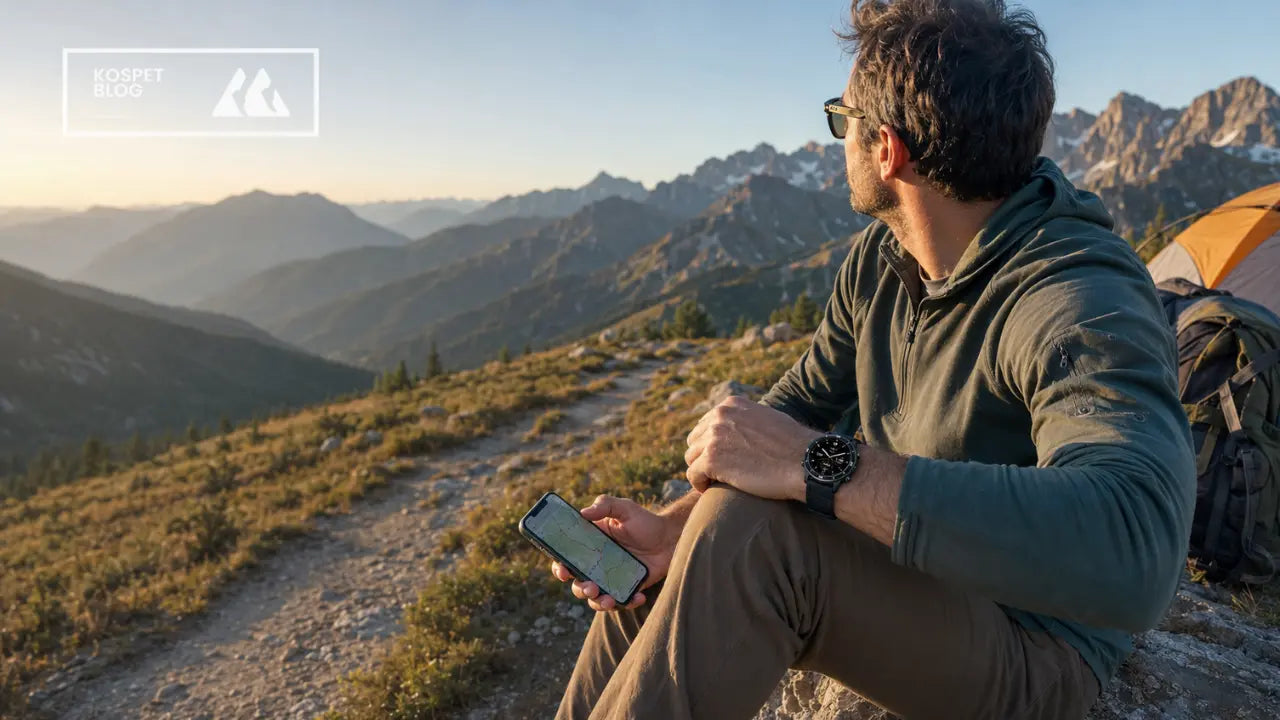
Suunto Vertical becomes valuable after phone coverage disappears. Its focus is maintaining route awareness across long hikes, mountain travel, field research, and multi-day expeditions.
- Offline maps show contour lines, paths, water, landmarks, routes, and points of interest directly on the wrist.
- Dual-band GNSS improves positioning in valleys, forests, and terrain that can obstruct satellite signals.
- Long GPS modes reduce charging interruptions during extended routes.
Keeping maps on the wrist preserves phone power for photography, communication, or backup navigation. That separation becomes particularly useful during trips lasting several days.
Suunto describes the Vertical as military-tested but does not publish a directly comparable upper operating temperature on the cited product page. The Vertical earns its place through offline navigation and GPS endurance rather than a stated heat ceiling.
Heat-Resistant Outdoor Smartwatches for Different Activities
The right choice depends on the problem most likely to interrupt the activity.
| Activity or Environment | Recommended Model | Reason |
|---|---|---|
| Construction, agriculture, utilities, landscaping, or field maintenance | KOSPET TANK M4C | Heat-related testing, screen visibility, durable construction, and offline tools match demanding outdoor work. |
| Desert day hikes, ranger patrols, or remote shifts with scarce charging | Garmin Instinct 3 Solar | Solar input and a low-power display reduce charging pressure during long periods outside. |
| Outdoor events, travel, running, or mobile work within an iPhone ecosystem | Apple Watch Ultra | Communication, apps, payments, and a published wearing-temperature range support connected use. |
| Backpacking, mountaineering, route scouting, or multi-day field research | Suunto Vertical | Detailed offline maps and long GPS modes protect route awareness beyond cellular coverage. |
A smartwatch should remain one part of an outdoor equipment setup. Backup navigation, hydration planning, and established work-rest procedures still matter during extreme heat.
FAQs
Can You Wear a Heat-Resistant Smartwatch in a Sauna or Hot Shower?
Generally, no. Steam, hot water, soap, and rapid temperature changes affect seals differently from dry-air heat. Water resistance does not equal steam resistance. Remove the watch unless the manufacturer explicitly approves that environment.
Can You Leave an Outdoor Smartwatch in a Hot Car?
Avoid doing so. A parked vehicle can exceed a watch’s storage limit, especially under direct sunlight. Move an overheated device to a shaded, ventilated area and let it cool naturally. Do not use ice, cold water, a refrigerator, or a freezer.
What Should You Do When a Smartwatch Shows an Overheating Warning?
Remove the watch, disconnect its charger, stop power-intensive functions, and place it in a cooler location. Wait until normal operation returns before wearing or charging it again. Contact the manufacturer when warnings continue after a complete cooldown.